
LCLT Fall Newsletter:
Food Security on Lopez and Beyond
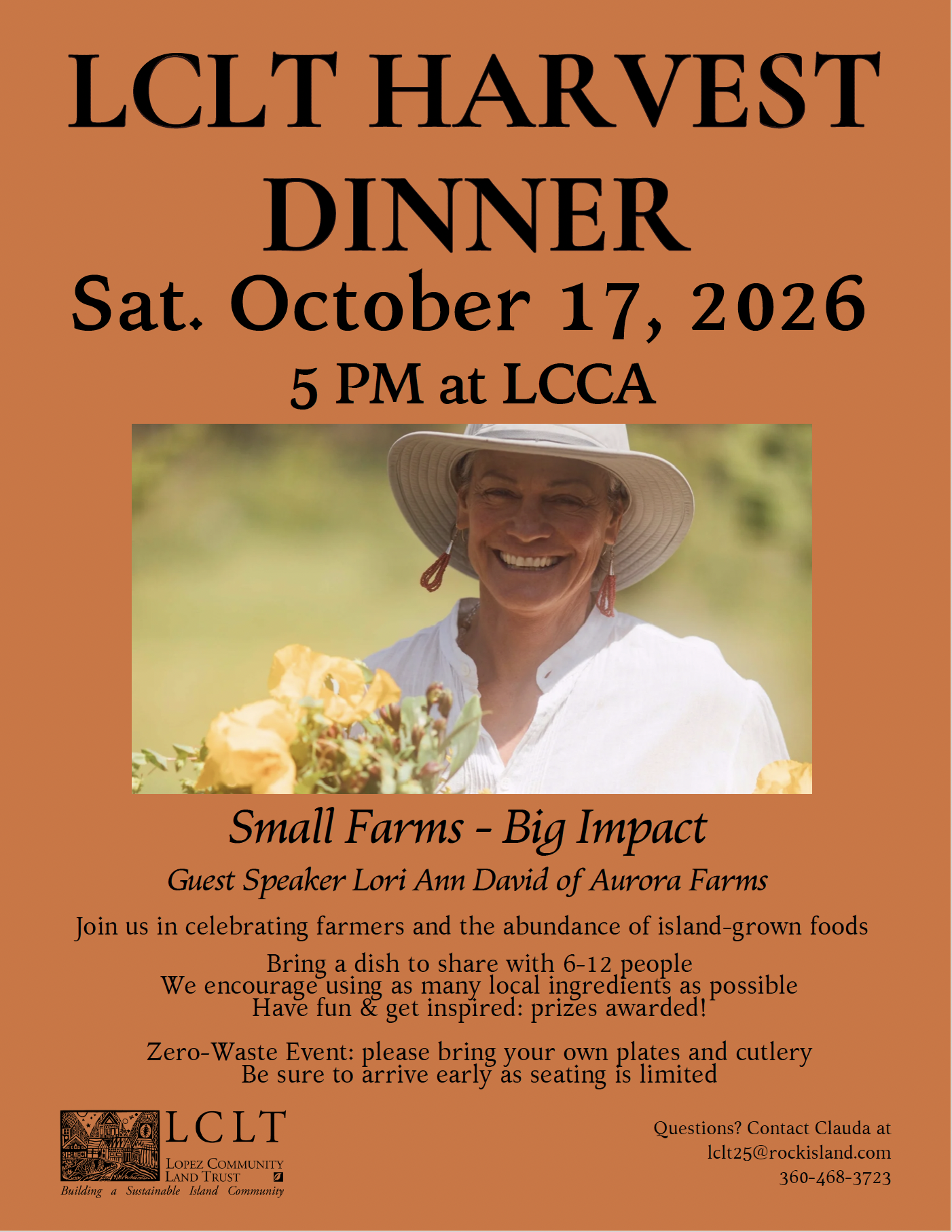
5pm on Saturday, October 17, 2026
At the Lopez Community Center
Guest Speaker Lori Ann David of Aurora Farms
Read on for more details.
Food Security on Lopez and Beyond
by Rhea Miller, Community Liaison
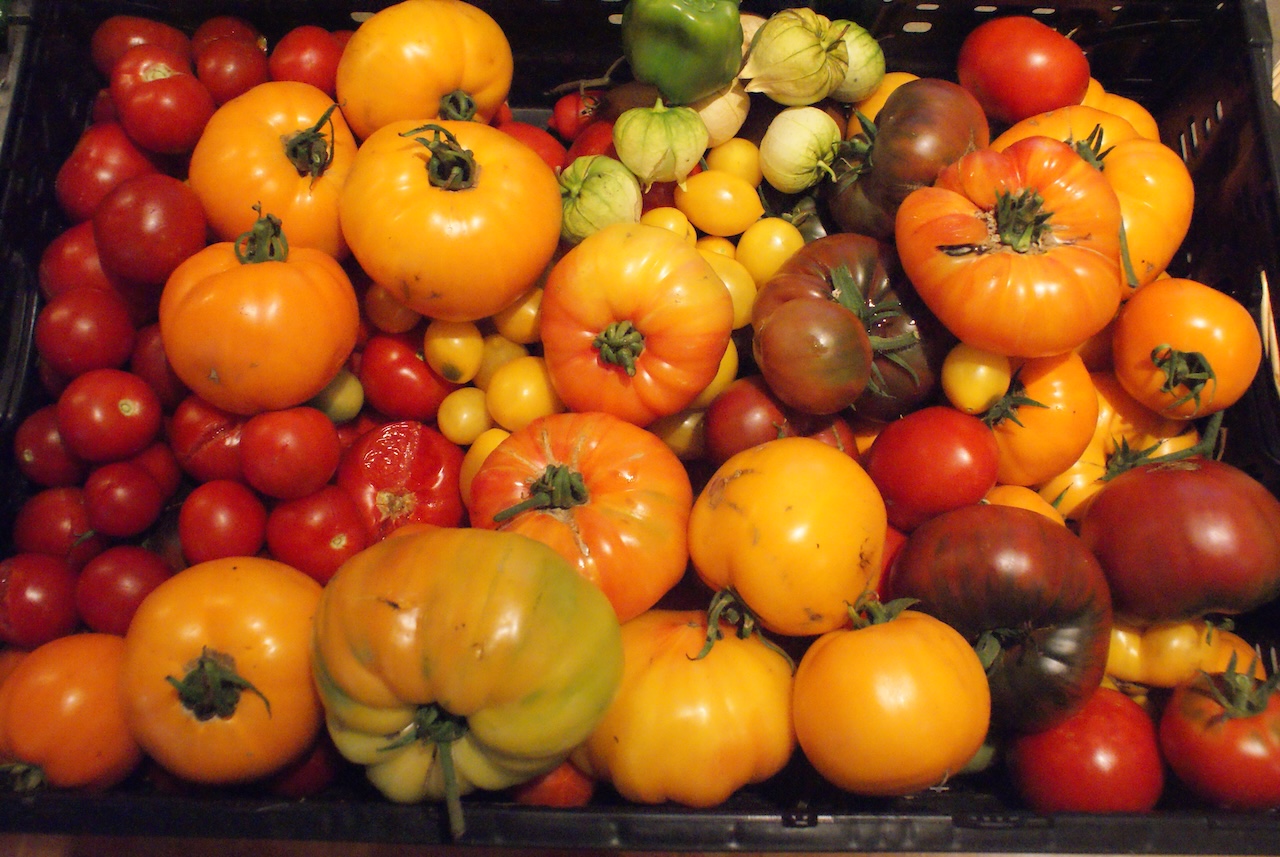
Lopez bounty.
Food security is a growing concern, with the recent widespread outbreak of Cyclospora showing us just how vulnerable our corporate food system is.
For years, U.S. citizens generally felt protected by food testing protocols. The United States already ranked only 13th overall out of 113 countries in the 2022 Global Food Security Index. Even so, both the FDA and the CDC have had serious budget cuts since the start of 2025.
What do we know about food grown on Lopez?
In 2015, Dr. Claver Bundac, founder and CEO of BioMedix, gifted LCLT with a food testing lab. Due to very little use, the lab was relocated to Puerto Rico where it remains a community asset. Through testing, we learned that one of the biggest factors for foodborne illnesses is not necessarily the amount of contamination, but how long it takes food to travel from field to table, allowing the contaminants to grow. For instance, a Lopez farmer came in to get his fruit tested. His hands were visibly unwashed from animal chores. Yet, the fruit tested clear of contaminants, whereas an organic strawberry from Seattle tested unsafe.
Bacteria lives on food. There is no avoiding it. The concern comes in how long the bacteria incubates with the food until it lands on our table. How many times have we seen pallets of food delivered and sitting out in the sun on the deck of an establishment, waiting to be refrigerated? How long did the food have to travel and be handled multiple times by multiple players? That is where the bacteria progress to a point unsafe for human consumption.
When our food comes directly from a local field to our tables, we drastically shorten the incubation time for foodborne-related bacteria to take hold.
One of the best ways to protect our food supply is to have a robust local food system. That is why we are so grateful to have yet another farm, Legacy Farm, as part of our local food network. We are grateful for the farmers growing our food, the farm-to-school gardens at the school, and the generosity of those who entrust LCLT with gifts of land. Our sustainable ag intern program expands the next generation’s awareness of the significance of local food.
It is said that we have three days’ supply of food in our stores. As of this writing, we are in day one without ferry delivery service to our stores, and it is unknown when the ferry service will resume. Every opportunity we have to support local farms is another step toward growing food security for Lopez.
Land Use and Food Security
by Sandy Bishop, Executive Director
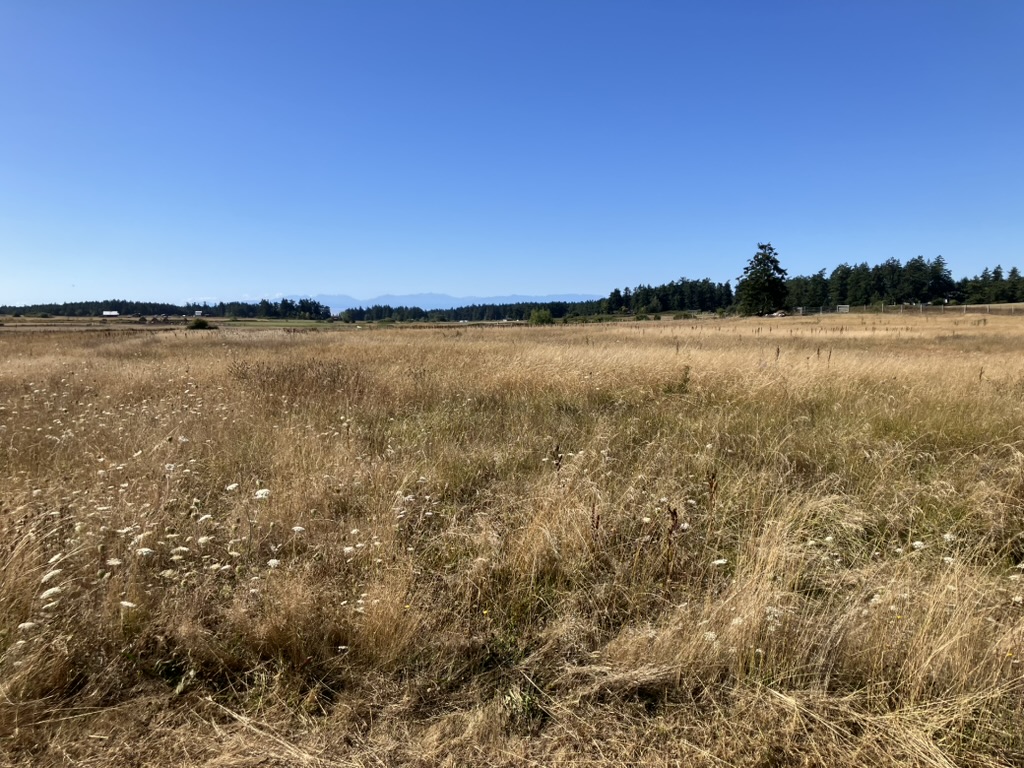
A view of Legacy Farm from the house facing southwest.
In the late 1970’s I attended my first San Juan County Comp Plan meeting. Comprehensive Land Use Planning was new, and by 1979, the first county-wide Plan was adopted. I remember Commissioner Eleanor Howard said at the time, “You have to be more careful with an island.” I knew that statement to be true even though island living was new to me.
The arguments that filled the Community Church Hall were lively and sometimes shocking. The insults often brutal. Bargains were made. And land use policy on Lopez took shape. In the meetings, it looked as though the natural environment was not the influencer. It was loud, strong voices that set the fundamentals of land use planning into action.
I often think back to that introduction to planning and negotiation and reflect on just how messy civic society is in the making. The political leaders had the difficult job of listening and exercising the art of compromise, mostly being guided by constitutional protections and the people who showed up in the room. The big, loud voices seemed to rule the day, but it was the quiet determination of leaders like Eleanor Howard who shaped the essence of land use. The seasonal streams, the near shore, the legacy forests, soils, and watersheds were given voice through her.
50 years on Lopez later, I wonder about engagement with this messy civic business at the intersections between democratic principles, land use, agriculture, housing, and the Eleanor Howard sentiment of, “You have to be more careful with an island.”
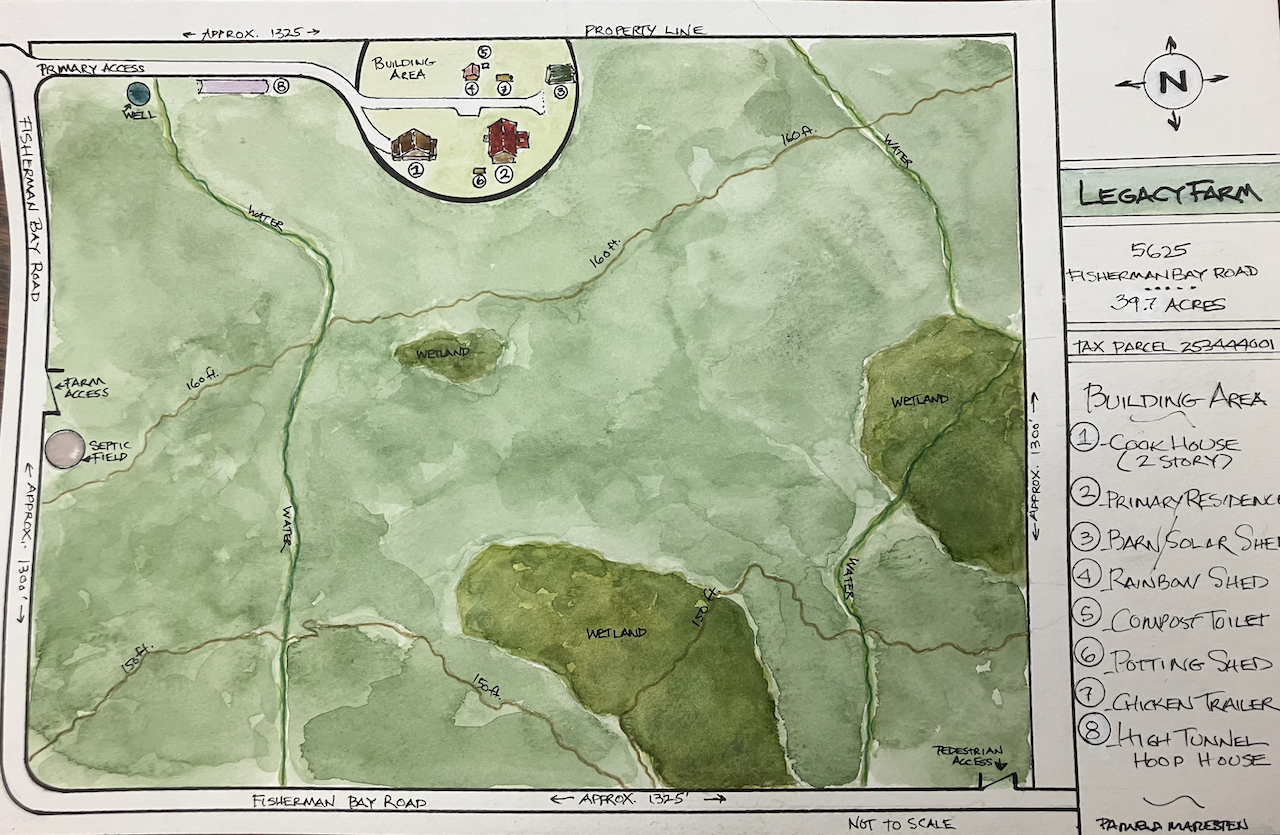
A map of Legacy Farm developed by Pamela Maresten.
Earlier this year, LCLT purchased a fourth agricultural-related property, Legacy Farm, formerly North Star Farm. The 40-acre farm purchase was made possible through a gift from someone who holds farmland close to her heart. As we plan to steward the land, we look forward to enriching soils and producing more local foods and goods.
Another rural community said recently in an article in The Guardian, “In order for us to keep the character of our community, we need to keep those farmers on that land, and we need to keep that land in the agricultural section for economic reasons and environmental reasons and cultural preservation – Our local food is like no other.”
Despite the many challenges and us striving to reach a more perfect union, we do a darn good job here on the island sharing knowledge and creating a stronger local food system. Food security on Lopez depends on our continued care and growing engagement.
Reflections on the 2026 Intern Program
by Clauda Costa, Stewardship Manager
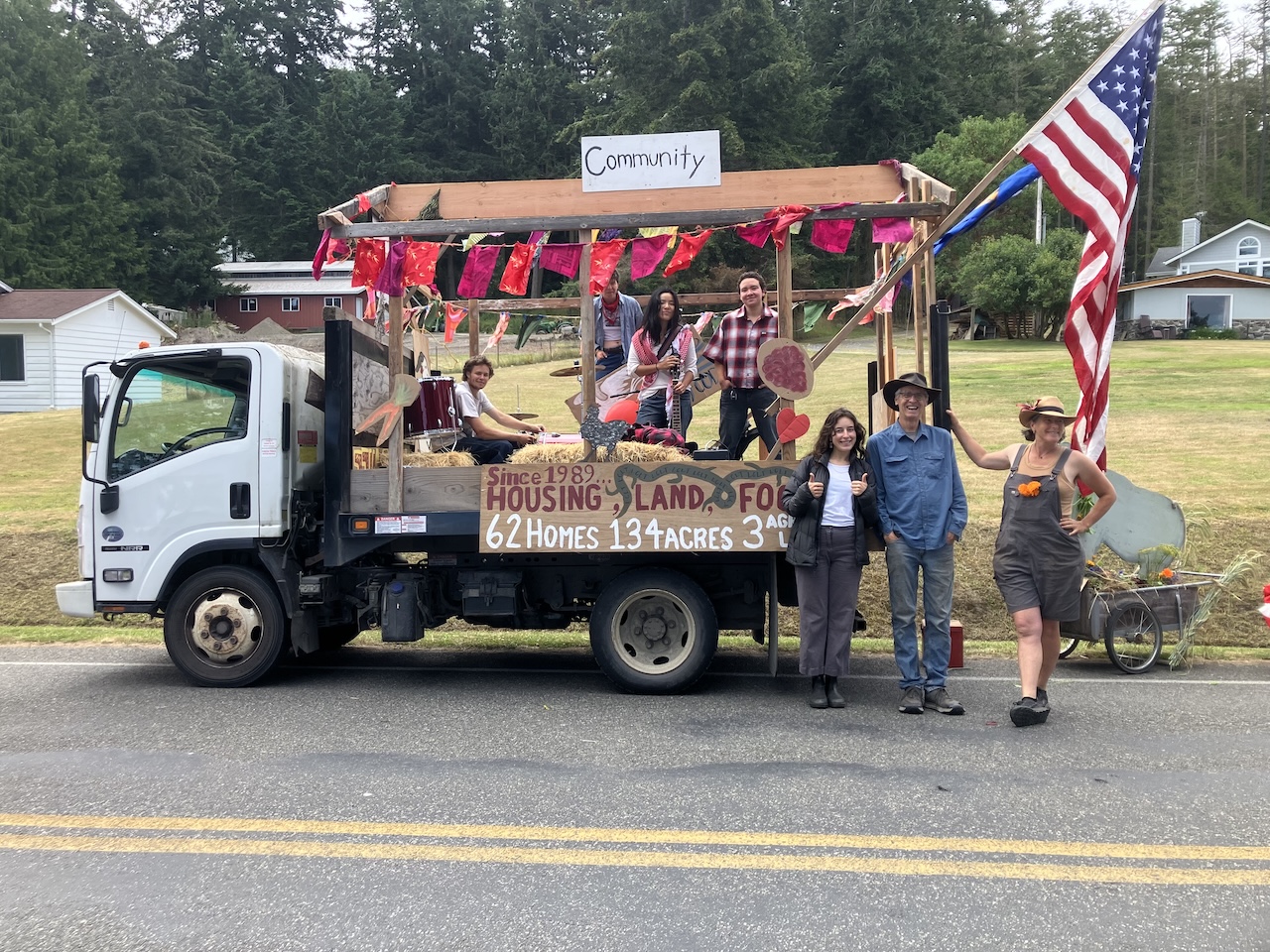
LCLT’s 2026 Fourth of July Float with interns and Midnight’s Farm.
This year, seven interns from Hawaii, Washington, California, Ohio, and Pennsylvania journeyed to Lopez to learn about sustainable agriculture and experience our small island community.
It began when we gathered at Vita’s to enjoy live music on a Friday in late June. Most of the interns were just meeting for the first time, and in the way that a Lopez summer can bring it out of people, dancing and laughter and food ensued.
Somewhere along the way, Midnight’s Farm intern Hannah invited folks to head over to Odlin Park to meet some friends that she had made on San Juan. At the bonfire, again in typical Lopezian fashion, someone brought out and started plucking the strings of a banjo. This prompted Alika, intern at Indigo Moon and Ladybird farms, to start a drum beat on an old cardboard box. And soon enough, Midnight’s Farm intern Lina brought out her violin and played by ear.
Upon realizing we had hired a band in the intern application process this year, we had to gather and strategize. A few days later, after meeting for dinner and a seminar on lessons for leaders in systems change, we moved over to the living room, pulled out a copy of “Rise Up Singing,” and began to jam.
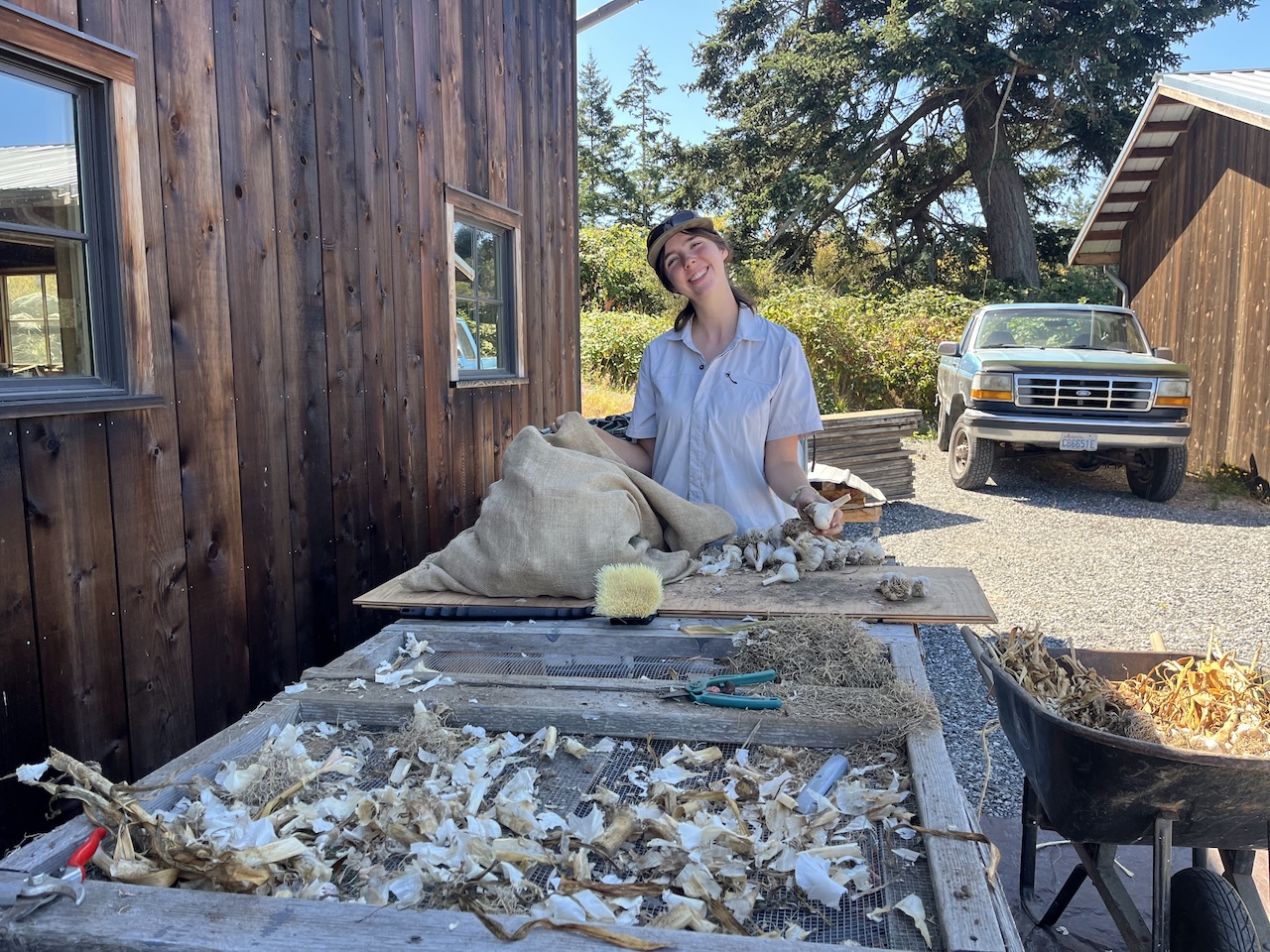
Intern Carilyn sorting garlic at Watmough Bay Farm.
From this jam blossomed our Fourth of July float ideas, a battle of the buskers at the Saturday farmers markets (where Horsedrawn intern Julius and Watmough intern Ezekiel would busk against Lina and Alika), and eventually led to Ezekiel, Lina, and Alika performing at the Galley singer-songwriter series under the name “Loco Crazy Loco Trio (LCLT)” to close out their summer.
In the interns’ final check-ins, this year and every year since the program began, the biggest takeaway we receive is the power of living in community for the first time, especially one that supports local agriculture and shared tables of good food.
It has been 20 years since our sustainable agriculture internship program’s inception. In that time, LCLT has hosted over 50 interns and helped over 12 farms in the pursuit of bringing resiliency to our local food system and, in turn, the global food system. We look forward to the next growing season with its new crew of interns.
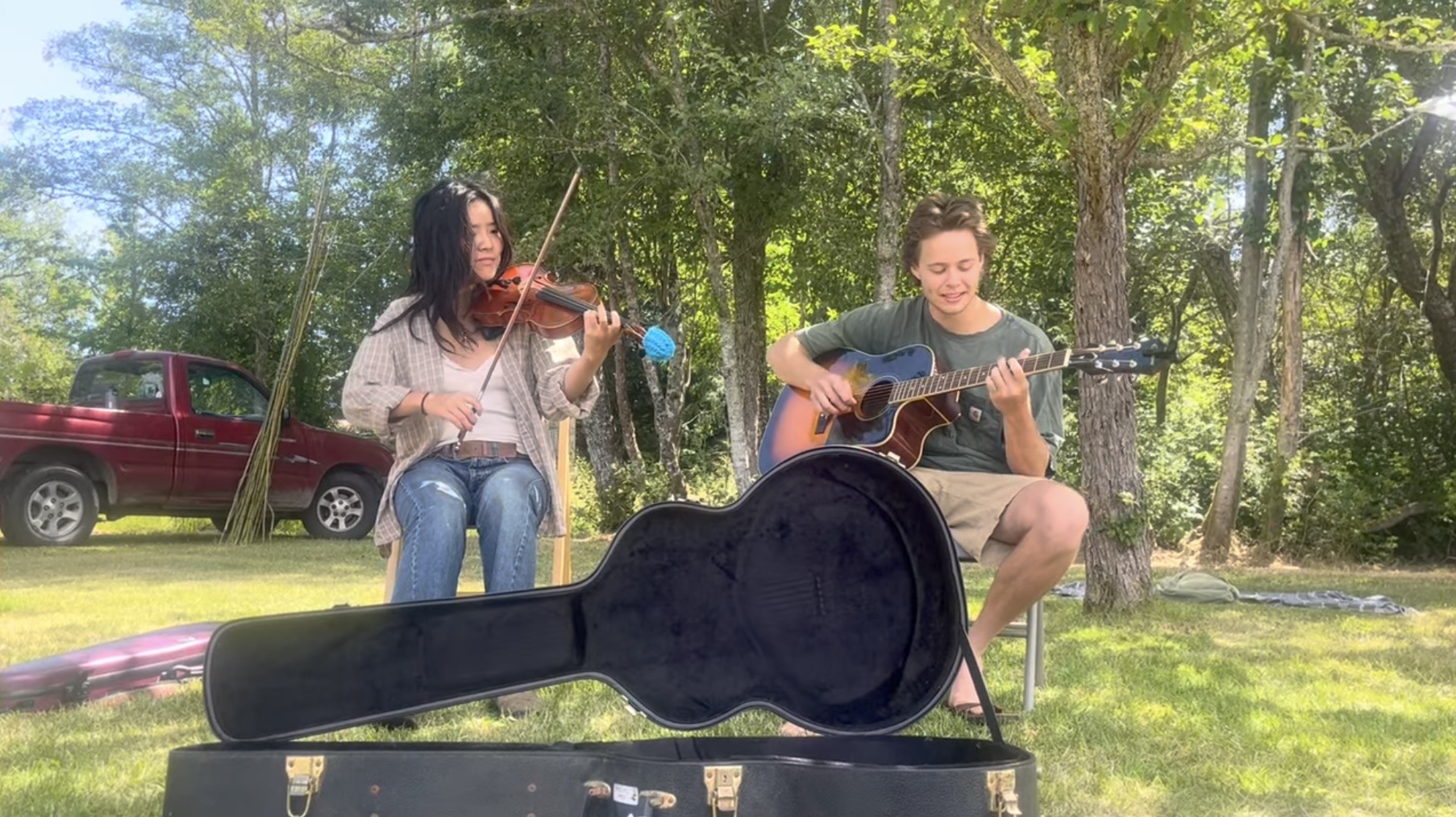
Interns Lina and Alika busking at the Saturday Market.
LCLT Harvest Dinner
Saturday, October 17th, 2026
At the Lopez Community Center
Doors open at 5 PM
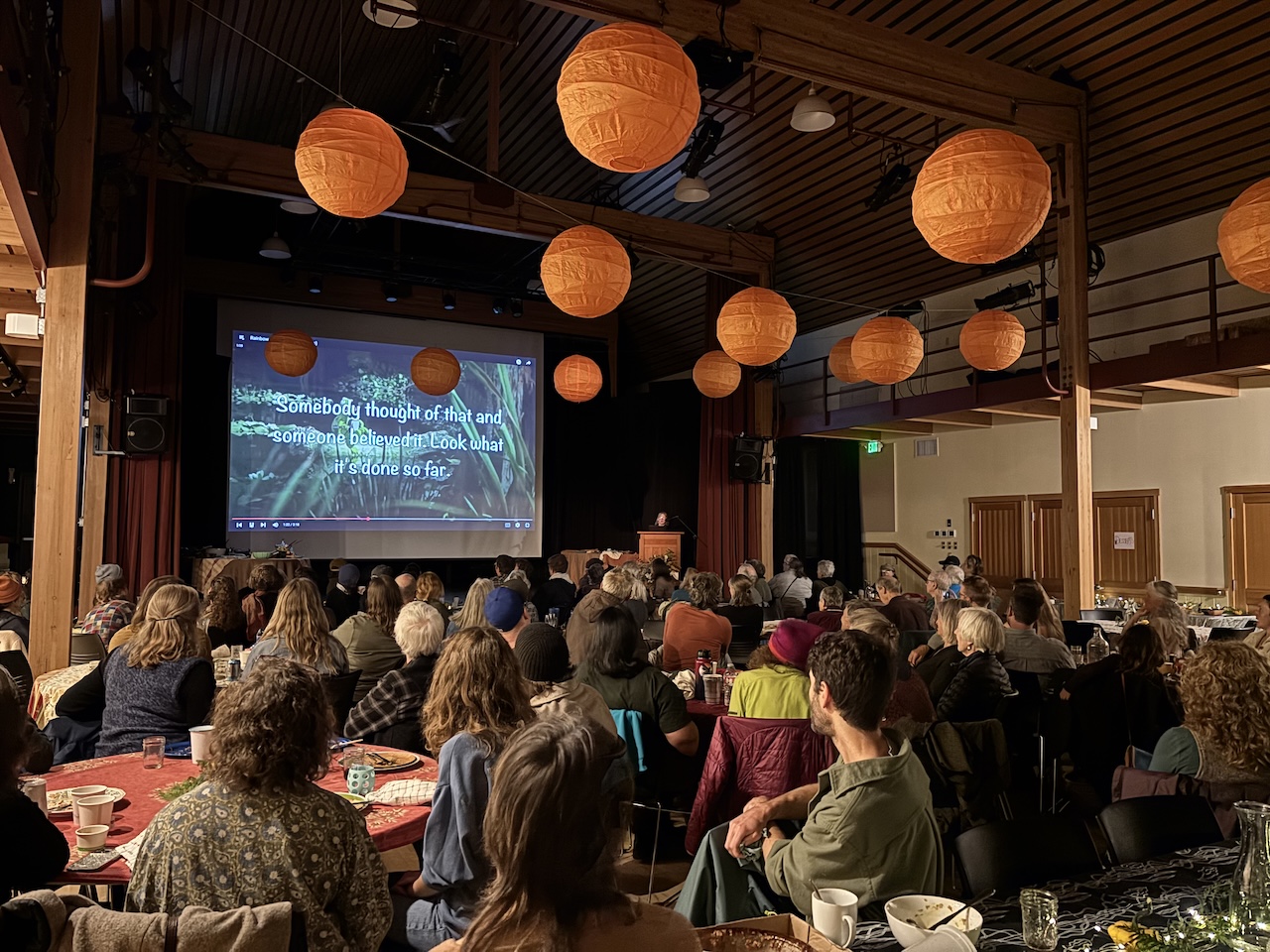
The crowd at Harvest Dinner 2025 singing “Rainbow Connection” by Kermit the Frog.
Join us for the “world’s best potluck” to celebrate local farmers and island-grown foods. In honor of the bounty and abundance on Lopez, we encourage you to make a dish containing local ingredients, large enough to share with 6-12 others. Judges will present prizes in categories such as best use of local ingredients, most beautiful display, and best dessert – so get creative!
Doors open for the Harvest Dinner at 5 pm. Max capacity is 125, so come early to ensure a seat and give the judges plenty of time to view the dishes. Dinner starts at 6pm with awards announced after the meal, followed by presentations. Wine will be available for purchase.
This is a zero-waste event. Please bring your own tableware (cutlery, plate, cup, etc).
Harvest Dinner Presentation from Lori Ann David of Aurora Farms:
Small Farms – Big Impact
Lori Ann David is the owner/operator of Aurora Farms LLC, a 96-acre polyculture regenerative farm and ranch in year-round operation on San Juan Island. She has over 4 decades of richly varied agricultural experience, which started on Lopez Island in 1976. She “retired” in 2014 to create specialty winter growing in the PNW as well as multi-species rotational grazing with livestock, including some milking cows. She values the importance of livestock/rotational grazing for the full fertility of our lands. Lori Ann also grows vegetables, herbs, flowers, and fruit. She teaches classes and workshops, and yoga on her farm site. Aurora Farms continues to grow and champion island sustainability. Her passions are stewarding new farmers, cooking, making her large-scale sculptures, and aviation.
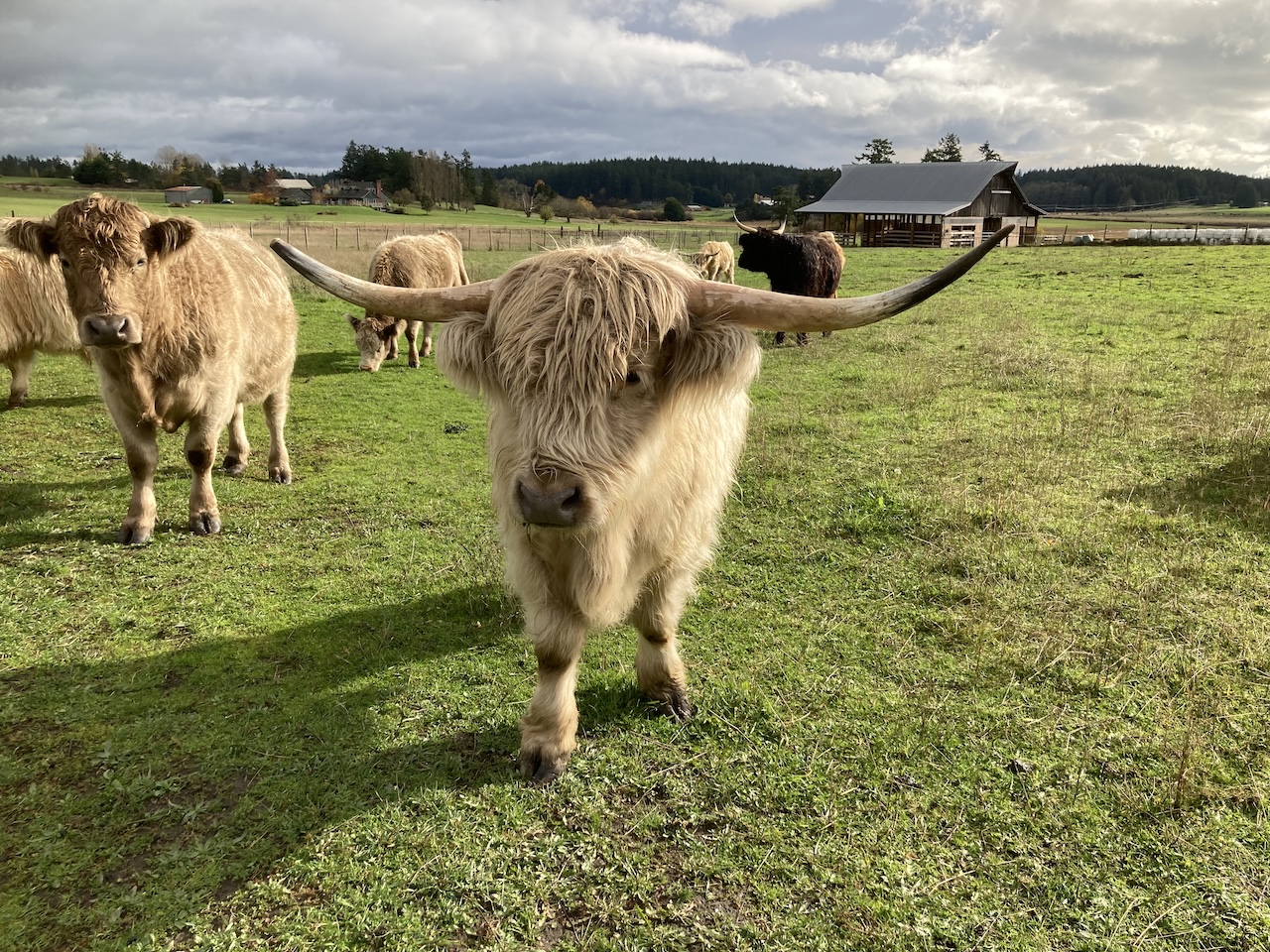
Scottish Highland Cross Cattle on Aurora Farms.
The ferry strike at the time of this writing shows just how important building a resilient local food system can be for the health of our small island community.
At LCLT we are grateful to count on our community for support. Your gifts are essential for to our work of strengthening our local food system.
A Year in Review from Stonecrest Farm
Photos & text by Meike Meissner
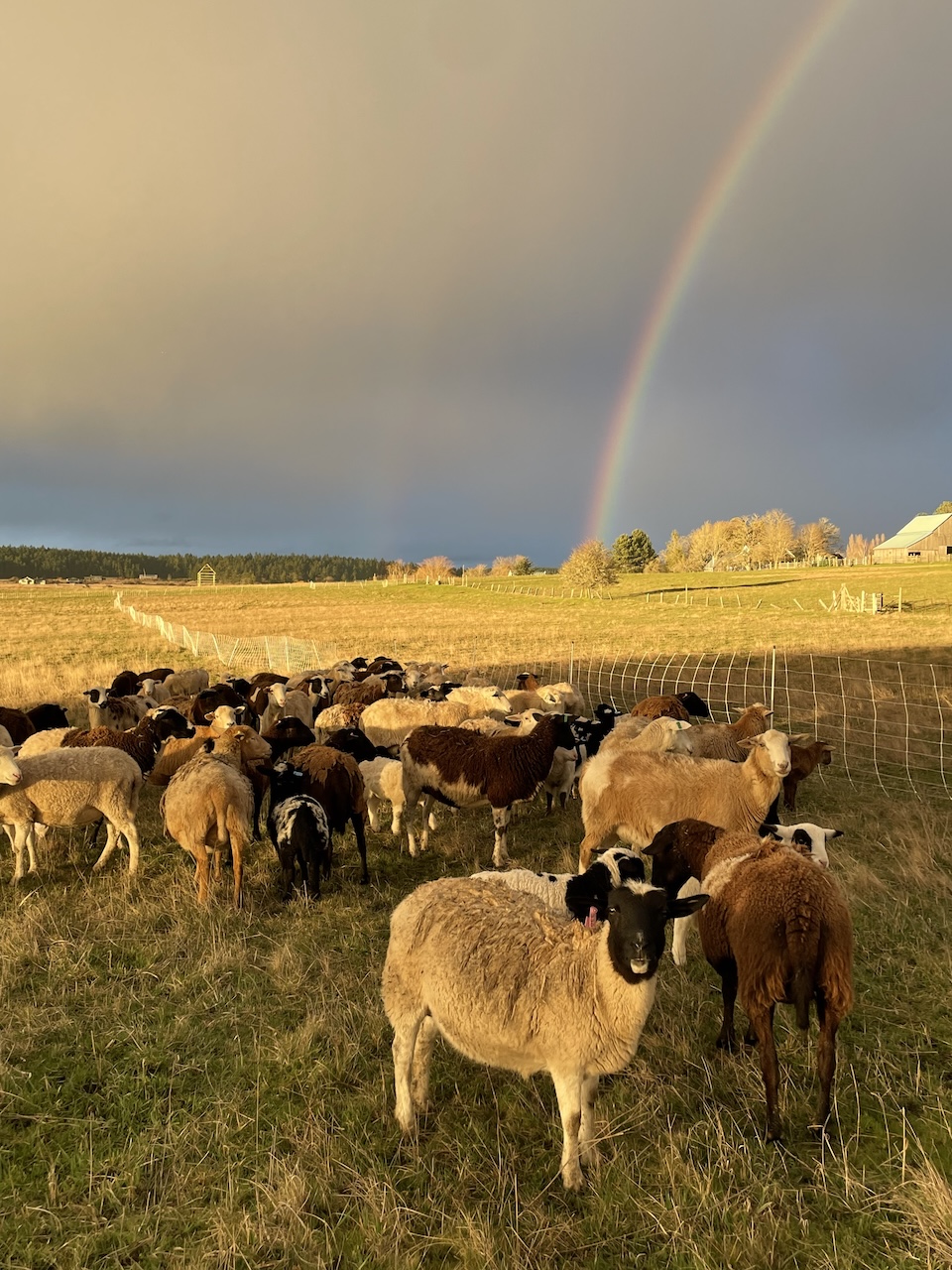
2026 was a mild winter for sheep and lambs.
The last twelve months on the farm included never-ending farm maintenance as we continue to repair and replace old fencing throughout the property, repair and replace the pasture water systems, and repair and replace old animal shelters. We lambed earlier in the year and appreciated the mild winter for a healthy and robust lamb crop. In the spring, the piglets started out in the barn, tasked with turning over the compacted straw and manure from the sheep’s winter zone, doing a fine job of it. The cattle moved off to graze our summer lease pastures to enjoy green grass throughout the summer and fall. Sunnyfield Farm loaned us a few goats to help with rose and blackberry control, and a couple of chicken tractors continued their rotation around the fields.
One of the highlights of this past year was receiving a FARM Fund grant to upgrade our sheep handling and sorting equipment. The new sorting system allows one person to work sheep easily and efficiently; for two people, running 100 lambs through is a breeze and a real game changer as we expand our flock. Again, we thank our land partners (Marty, Karen, Tim, Denise, Carol, Max, Amanda, Tam & Doug) for helping us raise great meat!
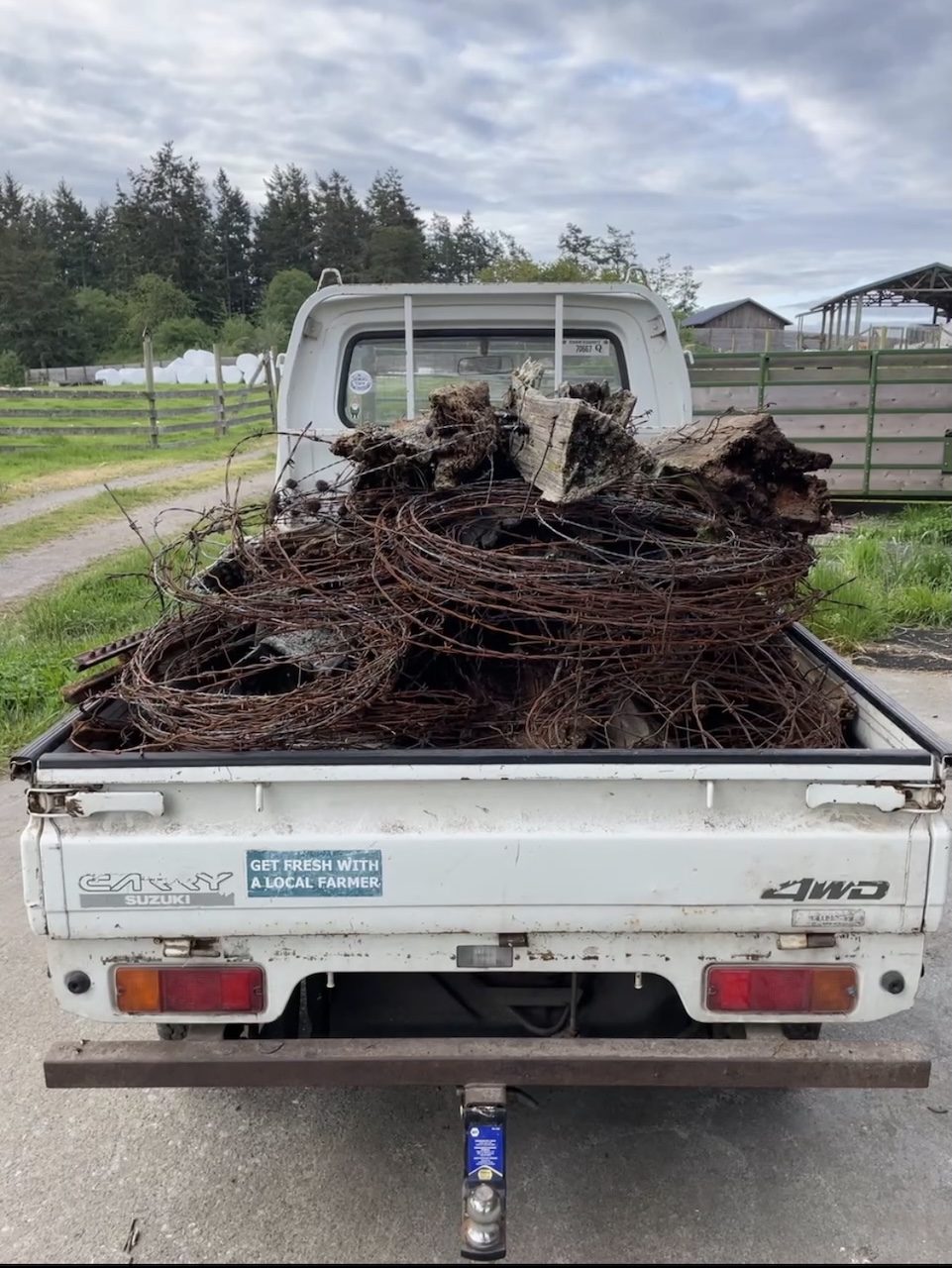
Metal farming or farm maintenance? Old farms produce a lot of fencing!
Let’s not forget that a resilient island food system begins with knowing where our food comes from. Local meat and dairy are more than a product of Lopez’s beautiful pastoral views, however. Both are part of a larger commitment to soil, pasture, and traditions that make local agriculture possible. Locally raised beef, pork, lamb, cheese, and poultry reflect hard work and time, plus a not-so-insignificant amount of off-island inputs – feed, minerals, diverse genetics in the form of new animals, and seed, fuel and materials for hay and grain production.
How do we secure access to these inputs, feed especially? And how do we then secure access to this locally raised protein? Investing in livestock infrastructure, mandating fencing and water systems for all registered agricultural properties, bringing back a mobile slaughter unit, supporting a local grain/feed hub, and perhaps even a county-based meat processor and a Lopez-based meat locker are just some of the investments our community can make to ensure a future of local food sovereignty and enduring vitality.
In the meantime, buy local when you can, support 4H kids learning to raise livestock, and fence your land and give a farmer access to grazing by running a hose out to a water trough. We need more farming, by more people, on more island properties, and it’s time for all of us to secure the future of our food.
Every Grain Counts
Photos & text by Nathan Hodges
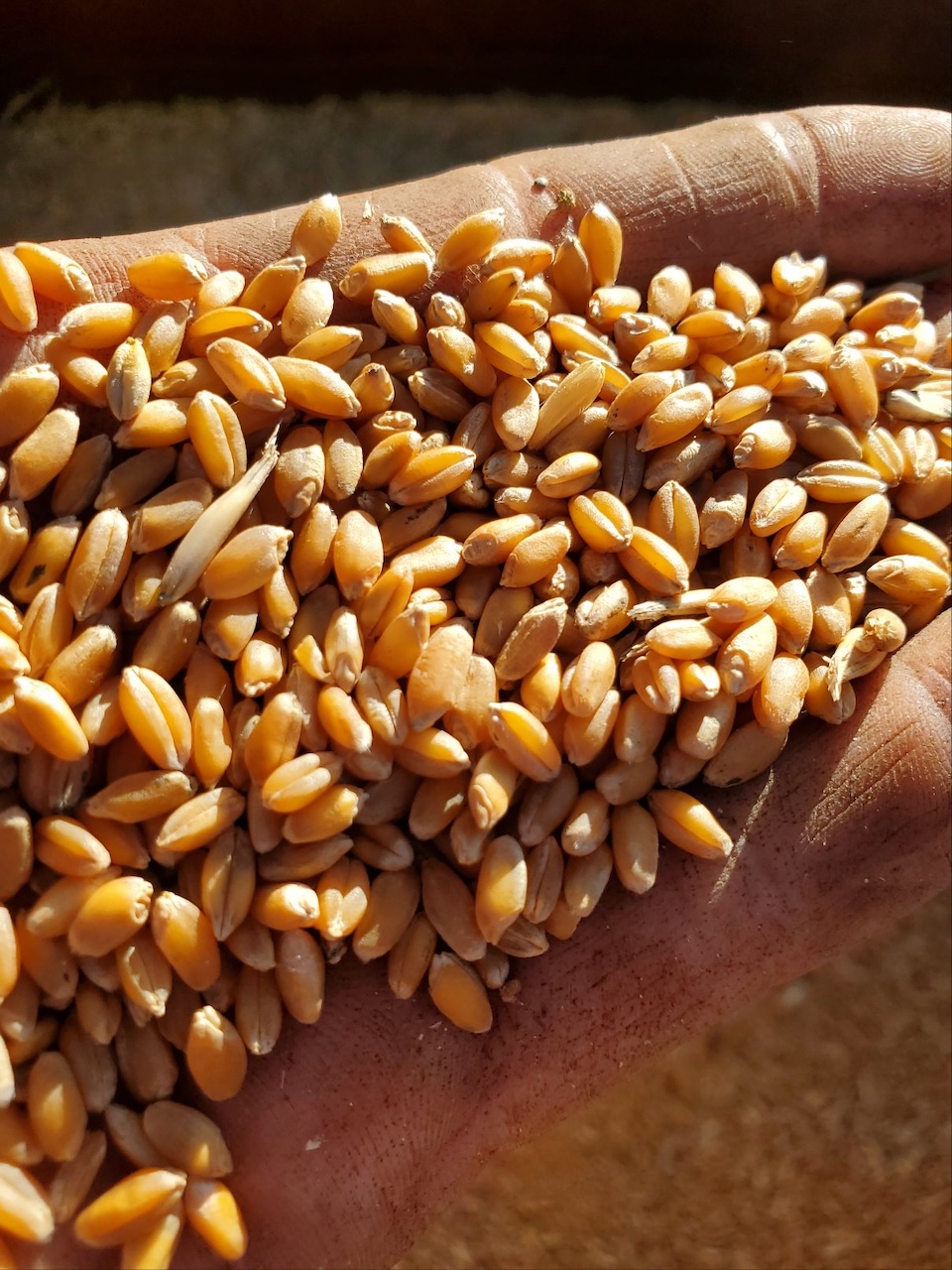
A handful of true gold.
With two heavy rains in August this year, the 30 acres of wheat we planted had a hard time drying down in the field. Grains need to be fairly dry in order to be stored safely. By weight, any grain that is above 14% moisture runs the risk of mold and insect damage in storage. With the high humidity, cool misty mornings, early rains, and heavy dews, the grain was stuck at around 17%. And with the weather changing and the days getting shorter, the odds of it getting much drier than that fall off sharply come September. So we harvested all the grain, knowing that we would have to dry it.
Two years ago it was a similar story – early rains made for a wet crop, and despite trying all sorts of drying methods, we ended up with 8 tons of moldy grain that got composted. What a heartbreak. This year, trying to be prepared, we salvaged an old grain dryer from San Juan Island. Sixteen feet tall, a capacity of 10 tons, rusted out, covered in blackberries, and cheap.
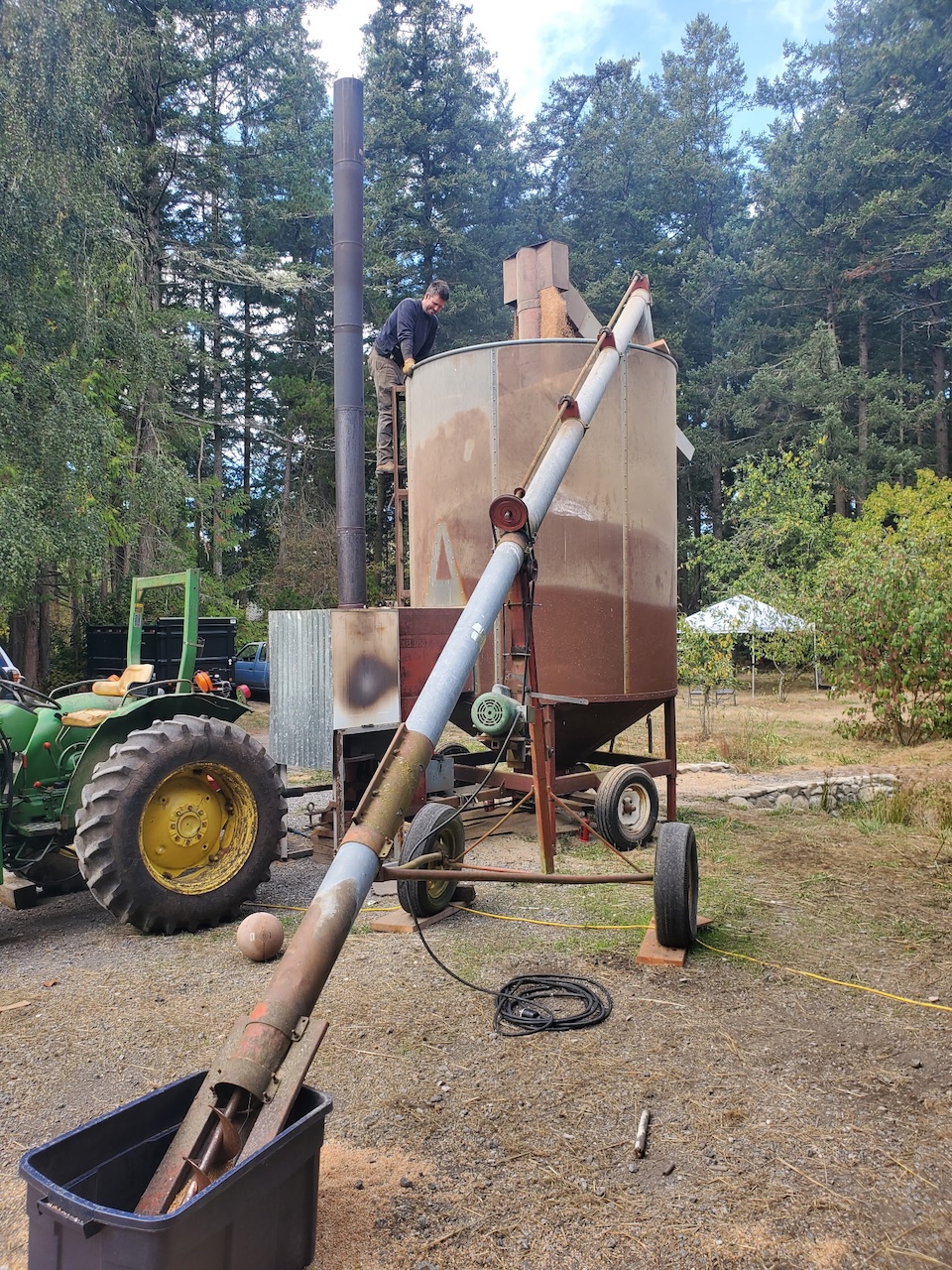
Nathan monkeying around on the grain dryer.
We hauled it back to Grayling here on Lopez and set about trying to restore it to functionality. Originally designed to be fired with propane, we ended up converting it to wood-fired with an old barrel stove and some scraps of sheet metal. Then, fueled by windfall limbs, old maple flooring, and a few pallets, we lit a fire, loaded up the dryer with grain, and started our first batch. It made for long days of knuckle busting, dangerous work – the machines all have belts and shafts that whip around, bolts shear, rusted metal needed welded reinforcement, there was a lot of climbing up and down the ladder and balancing on top of the towering machine, wrestling with tarps in the dark as the unexpected rain shower came in – but we got the grain dry. Then it went on to Steve at Island Grist for cleaning and storage and eventually milling for use in our bakery.
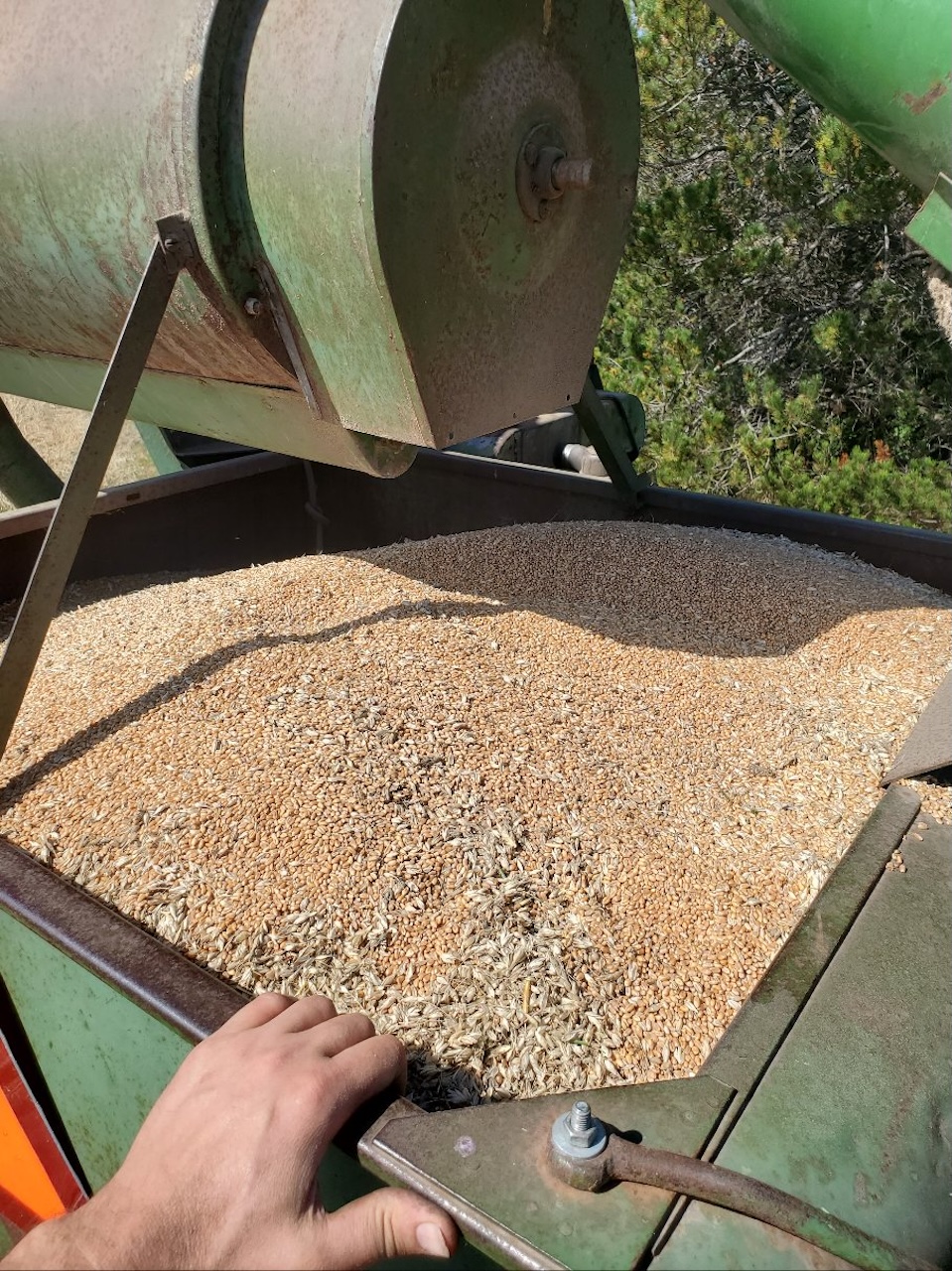
The combine harvester grain tank filled up with future bread.
Growing grain, saving seed, searching out varieties that grow well here, minimizing our reliance on fossil fuels, keeping machinery that is easily repaired, building soil fertility, and turning it into food for the community – these are all aspects of a resilient local food system. One built to not only put good food on our tables now, but in the future.
Living on an island we maybe feel that vulnerability a bit more acutely and it seems prudent to build our capacity to feed ourselves now – hoping we never have to, but ready in case we do. And we need more than farms and farmers; they can’t do it alone – we need communities that invest in food security, in land, in building the infrastructure – both physical and social – that is the foundation of a strong local food system.
Harvest Season at Still Light Farm
By Lena Jones
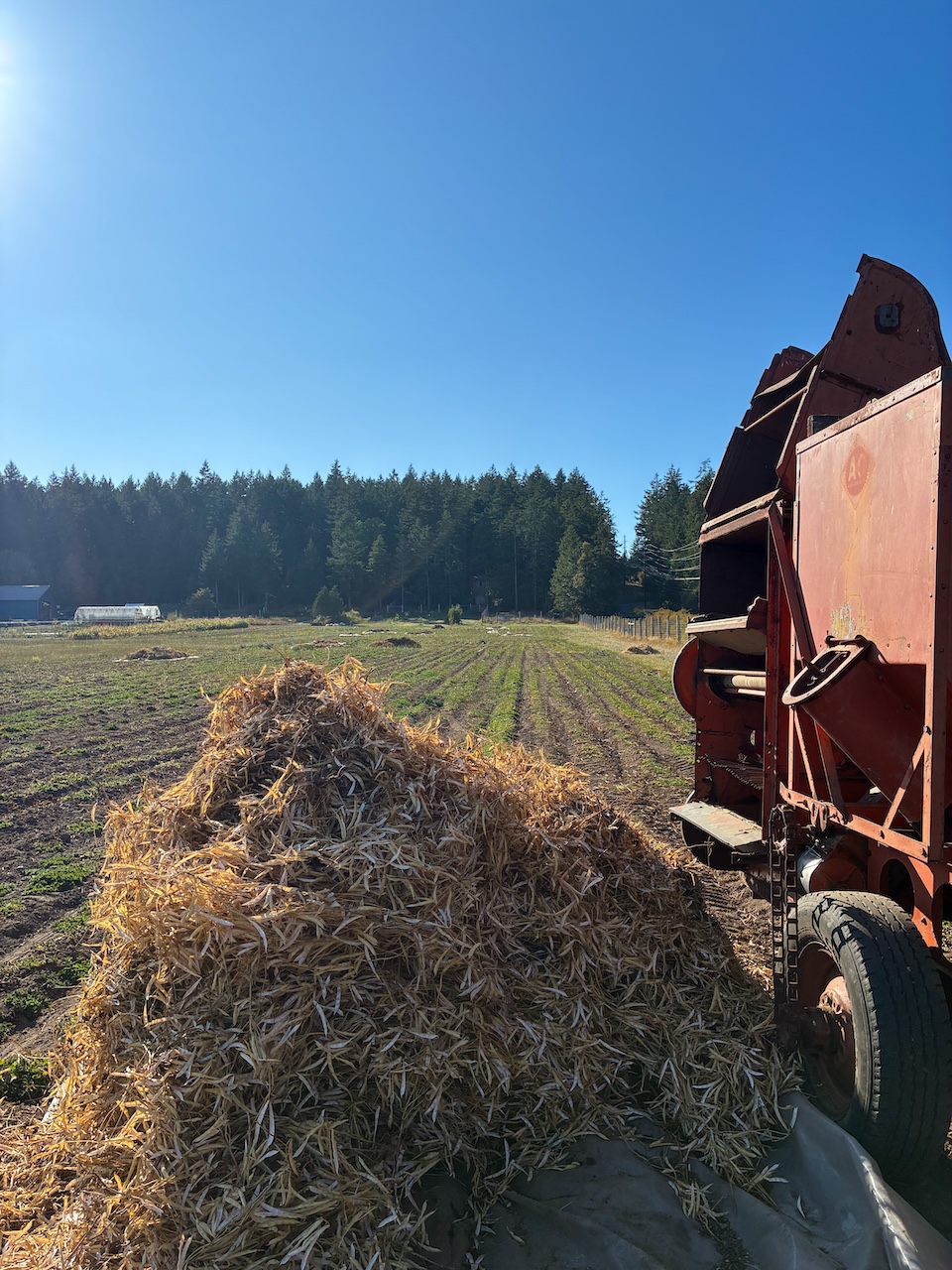
Beans in the field.
The autumn rains started two days after the equinox, the weather following the astronomical calendar in an orderly fashion. The days before rain were a flat-out hustle of lifting and carrying, the haze of chaff in the air. Fields were dotted with high piles of dry beans on Sunday, the combine moving from one to another, our arms lifting the beans and throwing them up onto the draper, then leaving behind a mountain of hulls to jump in and spread across the field. By Wednesday the field was flat again, the chaff spread out, the ground disced in preparation for next season’s oat crop. The beans were tucked safely in the barn, ready for winnowing. The greenhouses stuffed full of trial beans, still unthreshed. The whole farm quiet in preparation for the rain.
We doubled our dry bean ground, jumping up to two acres and eight varieties in production, with another fifteen trial varieties. To make this leap, we acquired a little Kubota cultivation tractor from the Skagit Valley and an All Crop Harvester passed along to us by North Star Farm. Each time we mechanize another part of the bean farming, we increase our capacity immensely, both in yield and in the ease on our bodies. Dry farming the beans for the second year felt like a gamble after our dry May, but we had a fortuitous rain in early June, nearly an inch, which watered in the seeds and got everything growing. Infrequent but consistent rainfall through the summer was enough for the plants in our heavy soil and the plants are producing a deep and wide root system.
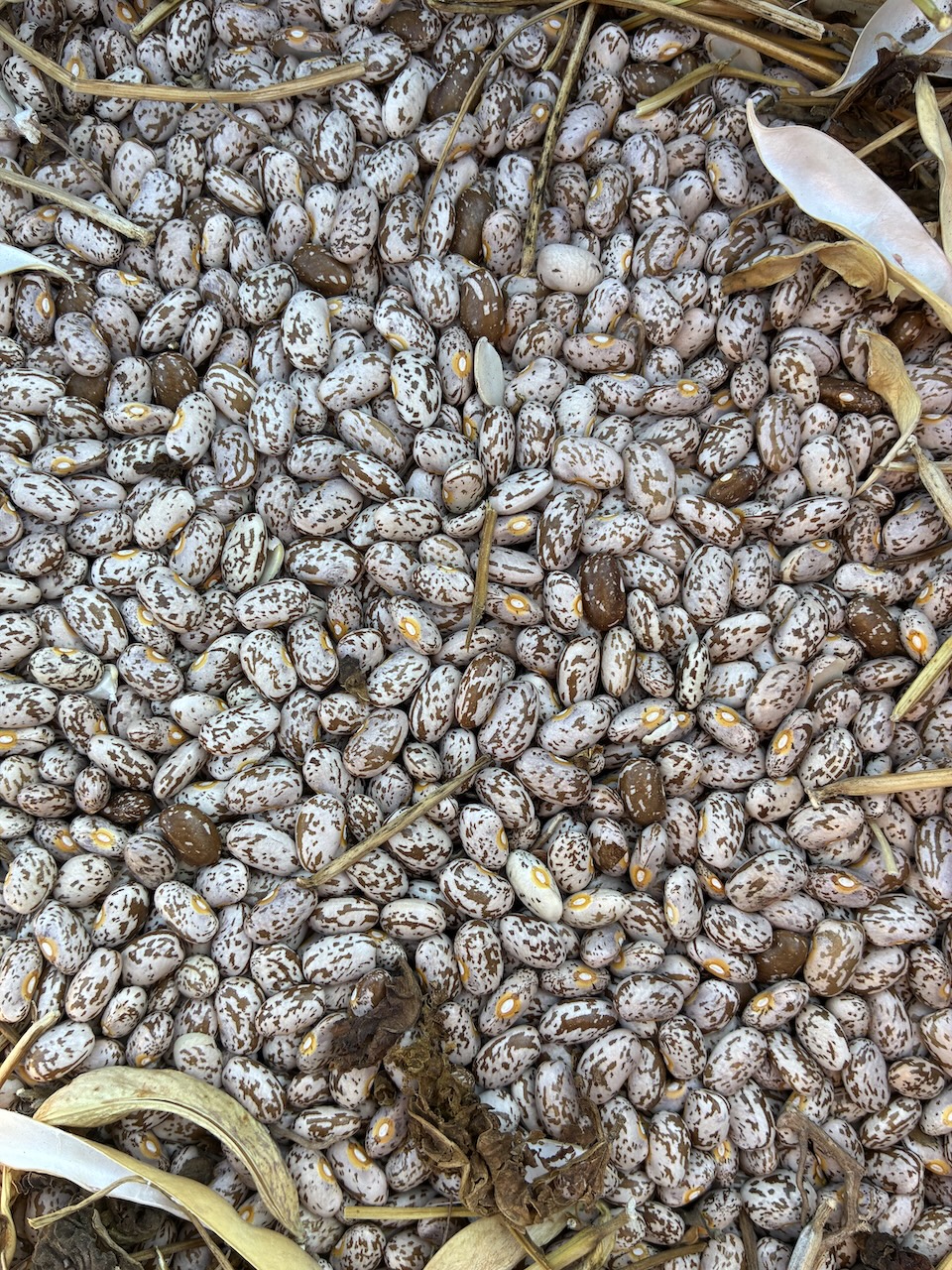
Northern Pinto beans.
We’re prepping for a big bean share this year. Rolled oats are joining the offerings, a long time in the works. Last spring we collected an oat roller from another farmer in Oregon and in late July we combined our first oat harvest, a hulless variety that was seeded last fall and grew nicely in our mild winter. It’s been great fun to test the oats, experimenting with different thicknesses to get them just the right level of toothsome, as one oat tester described them. They have a gorgeous, hearty flavor and feel really special on a Sunday morning. They’ll be available as an add on to our Bean Share this year, along with a nice selection of garlic and some specialty bean varieties. We’ll also be offering bulk beans again for bean lovers who like to stock up for the year.
JazzBall Reflections
Images & text provides by JAS Design Build
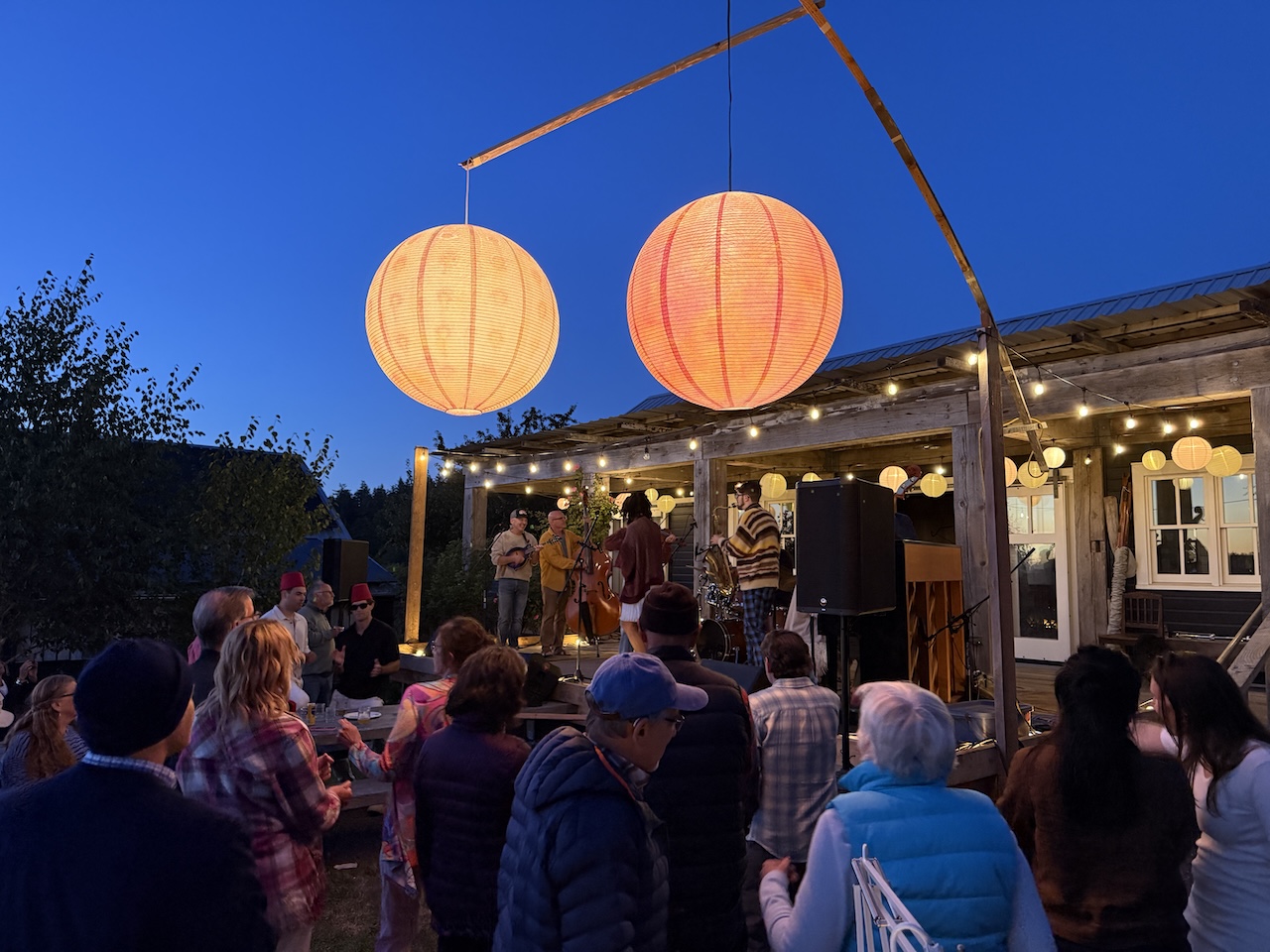
The Shed Boys and Sammy Miller & the Congregation join forces at JazzBall.
The great musician Nina Simone found her voice by uniting two worlds that are rarely connected: the structure of classical music and the free expression of jazz. Alchemy often happens this way, with each element calling and responding to the other so naturally that an unexpected pairing begins to feel inevitable. Through jazz, Simone harnessed her magic and described it simply: “Jazz is not just music, it’s a way of life, it’s a way of being, a way of thinking.”
Since 2021, jazz has been a meeting place for celebrating, amplifying, and supporting a shared commitment to affordable homeownership and sustainable rural development on Lopez Island. JAS co-founders Joe Schneider and Kim Clements have both served as dedicated board members for Northwest nonprofit organizations: Joe with the Lopez Community Land Trust, and Kim with Seattle JazzED. Their work with these organizations—one focused on affordable homeownership, sustainable agriculture, and rural development, and the other opening the empowering, community-building world of jazz to K–12 students—inspired the idea for JazzBall.
At a Seattle JazzED gala, Kim and Joe were introduced to Sammy Miller and the Congregation, an NYC-based band known for bringing the deep soul of jazz and the joy of the American Songbook to audiences and students across the country and around the world. Sammy and his bold, brassy musicians sparked a question: What if affordable housing, sustainable agriculture, rural development, and joyful jazz could come together at a Lopez homestead known as Rootball—creating a bit of magic while raising critical funds for LCLT?
Now in its fifth year, JazzBall welcomed more than 400 guests to swing to the sounds of Sammy Miller and the Congregation, enjoy some of the Northwest’s best tacos from local favorite El Taco ’Bout It, and join a shared commitment to making homeownership and sustainable agriculture possible. In its first four years, JazzBall raised nearly $500,000 for Lopez Community Land Trust’s work. Beginning in 2026, the event will move to a biennial schedule, with JazzBall No. 6 planned for August 2028.
What began as a small idea for a unique event has grown into a way of thinking about several urgent needs for communities of every size: how we house ourselves, how we feed ourselves, and how we build true community. JazzBall brings that conversation to the table with joy and celebration through the art and heart of jazz.
The people’s music calls to the work of Lopez Community Land Trust, and LCLT responds in kind—affirming that this work, whatever form it takes, comes from both the heart and the mind. It is also a lot of fun!
LCLT is deeply grateful to Joe and Kim.
Didn’t make it to JazzGarden but still want to support our work? Make a tax-deductible donation to Lopez Community Land Trust today!
Tax ID/EIN 91-4169975
P.O. Box 25, Lopez Island, WA 98261
LCLT is a 501(c)(3) nonprofit organization
Board of Directors
Joe Schneider, Board Chair; Jonathan Cargill, Vice Chair; Grant Carlton, Secretary; Eleanor Brekke, Treasurer; Carl Petterson, Kenny Mai, Jan Marshall, Eli Derzay, Hannah Rose
Staff
Sandy Bishop, Executive Director; Clauda Costa, Stewardship Manager; Marly Schmidtke, Administrative & Project Director; Rhea Miller, Community Liaison


